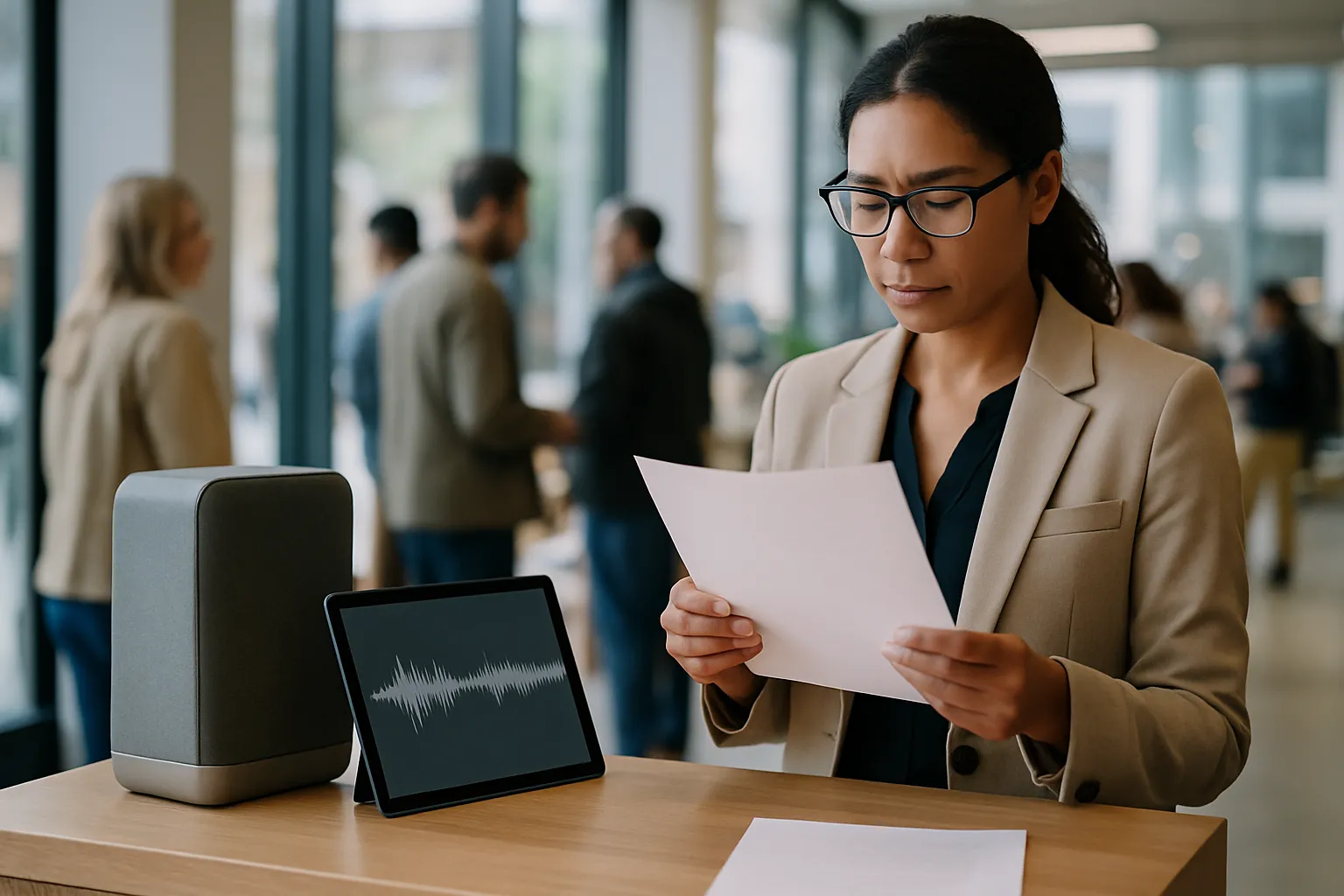

For a UK business, playing music is rarely just an operational detail. A radio in a shop, a television in a hotel bar, a playlist in a gym studio or streamed background music in a restaurant can each raise a public-performance licensing question.
The House of Commons Library published a briefing on 19 August 2026 explaining the current framework. It is not a new Act of Parliament and does not alter the law. Its value is practical: businesses playing music for customers or employees will usually need permission from the relevant rightsholders. This article concerns the United Kingdom only; EU rules should not be assumed to apply in the same way. This guide concerns music copyright and public-performance permissions administered by PRS for Music, PPL and PPL PRS across the UK. It does not cover separate local premises, event or entertainment licensing requirements, which may differ, particularly in Northern Ireland.
The two rights behind one track
A recorded song is not one right. There is the musical work, including composition and lyrics, and there is the sound recording, the particular recorded performance heard by listeners.
In the UK, PRS for Music represents songwriters, composers and music publishers for relevant uses of compositions and lyrics. PPL licenses public performance and broadcast uses of sound recordings on behalf of record companies and performers. PPL PRS provides TheMusicLicence as a single point of contact for many business uses of commercially available music.
That single route should not be misunderstood as blanket cover in every circumstance. The applicable repertoire, tariff, premises, method of use and licence terms still matter. The same discipline is useful when assessing AI music copyright, licensing and provenance: access to audio is not automatically permission to use it in every commercial setting.
Which businesses usually need to check?
GOV.UK says a licence is usually needed when recorded music is played in public or at a business, including background music from a CD, radio or music channel, and when live music is staged in public. Its examples include shops, hotels and guesthouses, restaurants and cafés, pubs, bars, gyms and other health facilities.
“Usually” is significant. It would be inaccurate to say that every venue needs precisely the same licence or pays the same amount. PPL PRS explains that the licence cost can depend on factors such as venue type, the way music is used, floor area, staff numbers, capacity, devices and live performances.
Why a radio subscription or TV Licence is not the full answer
A radio broadcaster may have permission to broadcast its output, but that does not normally include a business playing the station to staff or customers. PPL PRS states that music played outside a domestic setting can usually amount to public performance even where employees are the only listeners. Specific exceptions and circumstances should still be checked.
Television involves two separate licensing questions. A TV Licence covers watching or recording live television on any TV service and using BBC iPlayer, including in business premises where the relevant conditions apply. It does not replace the permissions required to use music contained in programmes, title sequences, advertising or other audiovisual content in public. Depending on the actual use, a business may therefore need both a TV Licence and TheMusicLicence. Multi-site operators should also record where sound is actually audible rather than treating every screen as an identical use case.
For operators building a consistent customer experience, this compliance layer sits alongside the operational choices discussed in how to create an effective in-store radio. Sound planning and rights planning should be reviewed together, but they are not the same task.
Streaming: public-performance permission and platform terms
Streaming introduces two separate checks. First, the business may need permission to perform the music publicly. Secondly, the streaming service’s own contract must allow business use.
PPL PRS states that popular consumer services, including Spotify, Apple Music, Amazon Music and YouTube, are intended for personal use under their terms and conditions. A business should not assume that buying TheMusicLicence converts a personal subscription into a commercial product. Where streaming is used on premises, the operator should check the service terms and whether a commercial background-music provider is required.
This is one reason an in-store radio is not simply a playlist. Source permissions, continuity, content controls and documented responsibilities all need consideration.
Royalty-free music and alternative licensing routes
GOV.UK says that a licence is not needed to play royalty-free music. In practice, that statement calls for evidence rather than assumption. The supplier’s licence must actually include the rights required for that specific commercial use, including the intended public use, premises, territory, repertoire and term.
PPL PRS asks businesses that believe their music is outside its repertoire to seek confirmation from their supplier. For a hotel group, restaurant chain or fitness operator, it is sensible to retain that confirmation with the service agreement, repertoire information, territorial scope and renewal dates. The UK system should also be kept distinct from the different licensing frameworks discussed in MoosBox’s guide to licensed music for shops.
A practical review for multi-site operators
- Map every audible area: shop floor, reception, dining room, bar, studio, staff room, terrace and waiting area.
- List every source: radio, TV, smart speaker, streaming app, local files, jukebox, live act and telephone hold music.
- Identify whether each source is used for customers, staff, visitors or a combination.
- Confirm whether the repertoire is covered by PPL PRS, another licensing body, or a documented direct or royalty-free licence.
- Read the streaming provider’s business-use terms separately from public-performance licensing information.
- Ask PPL PRS or a qualified UK adviser for a use-specific assessment where the answer is unclear.
What can be stated confidently
UK official guidance and the parliamentary briefing support a clear general proposition: a business playing live or recorded music in public will usually need a licence. They also support the distinction between PRS for Music’s role in compositions and lyrics, and PPL’s role in recorded music, with PPL PRS offering a joint licence for much commercially available music.
What cannot be settled by a general article is the exact tariff, exception, repertoire coverage, territory or contract position for an individual venue. Before adopting a multi-site UK policy or relying on a specific exemption, businesses should seek confirmation from PPL PRS and, where appropriate, advice from a UK lawyer or music-licensing specialist.
Conclusion
The operational question is not merely whether music is being played. It is which music is heard, by whom, in which location, from which service and under what permissions. That distinction helps prevent a common compliance error: treating a consumer subscription, a TV reception licence or an audio purchase as if it were also authority for public performance.
FAQs
Do UK shops need a music licence for radio?
Usually, yes. GOV.UK and PPL PRS indicate that playing radio in a business can require TheMusicLicence, including where it is audible only to employees. The specific facts should be checked.
Do employees-only areas need a music licence?
Usually, they can. PPL PRS states that music played outside a domestic setting can count as public performance even where only employees can hear it, including workplaces, canteens and staff areas. Exceptions and specific circumstances should still be checked.
Does a TV Licence cover music in a pub or hotel?
No. A TV Licence concerns receiving the broadcast signal. PPL PRS says a separate music licence is usually needed for music contained in broadcasts played publicly.
Can I use Spotify or another consumer streaming service in a UK business?
It should not be assumed. PPL PRS says consumer services such as Spotify, Apple Music, Amazon Music and YouTube are normally intended for personal use. Businesses should review both the platform terms and the relevant public-performance permissions.
Does royalty-free music always remove the need for TheMusicLicence?
Not automatically. The business should obtain evidence that the supplier’s licence covers the exact commercial use and that the repertoire is not managed by PPL PRS.
Does TheMusicLicence cover every song?
PPL PRS describes coverage for the vast majority of commercially available music. Businesses should still verify the relevant repertoire, tariff and licence conditions for their own use.
Sources
- House of Commons Library, Playing music in public places, 19 August 2026
- GOV.UK, Get a licence to play live or recorded music
- PPL PRS, What is TheMusicLicence?
- PPL PRS, Radio & TV Licences for Business
- PPL PRS, Music Streaming for Business
- TV Licensing, Business and organisations – check if you need a TV Licence