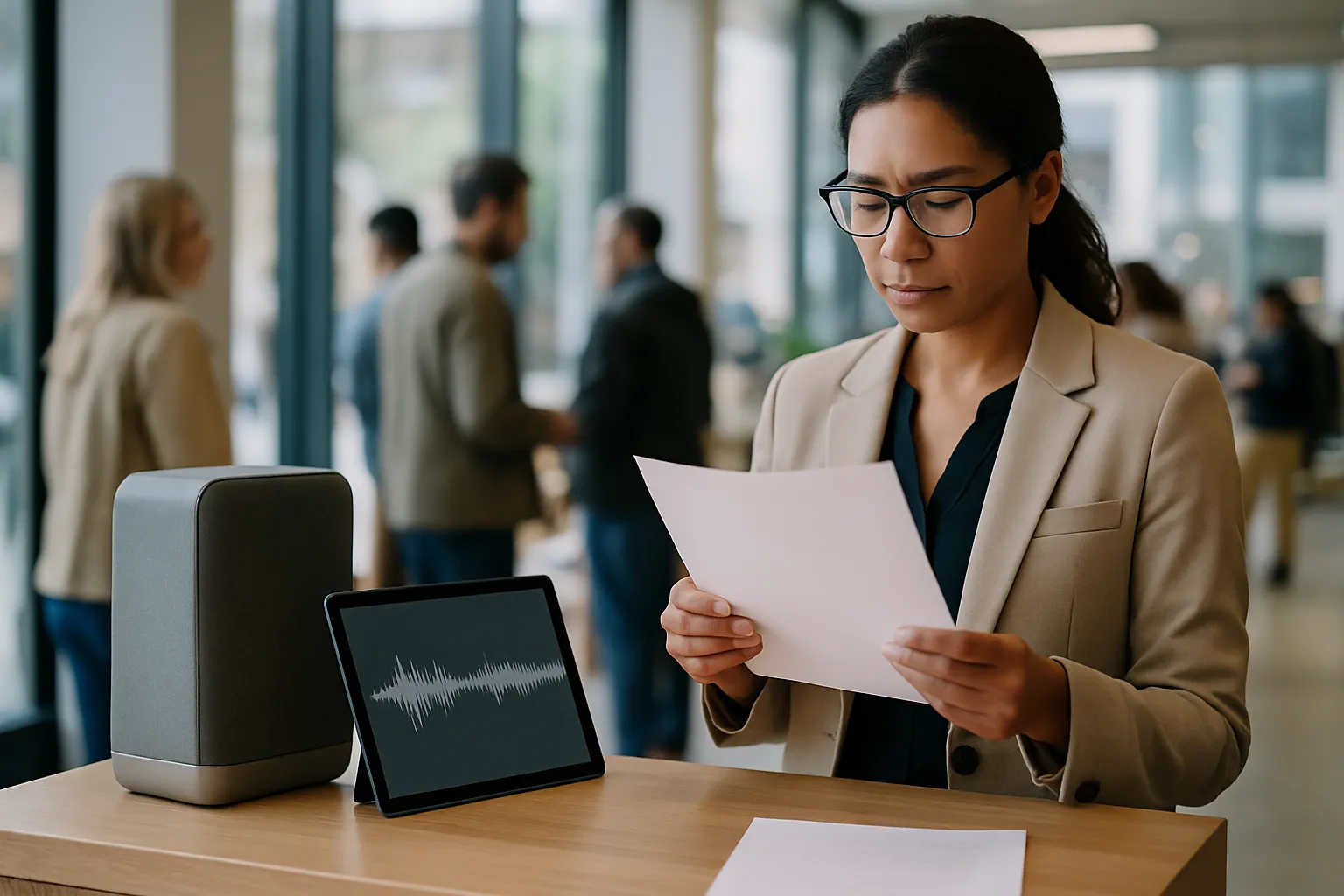


Background music is not just atmosphere
Licensed music for shops is becoming a more important topic for every business that uses music in a public-facing space. Shops, restaurants, gyms, hotels, cafés, showrooms and wellness centres often treat music as a simple background detail: something to make the space feel warmer, more alive and more welcoming.
And yes, music does all of that.
But in a commercial environment, music is not only atmosphere. It is content used in a business space, played for customers, visitors, guests or staff. That means it needs to be managed properly, with the right permissions, licences or documentation.
Recent updates in Italy around penalties for unauthorised music use have brought this topic back into the spotlight. But the issue is not only Italian. Across Europe, and also in the UK, businesses need to understand a simple point: using music in public is not the same as listening to music at home.
At home, music is personal entertainment.
In a shop, hotel, gym or restaurant, music becomes part of the customer experience. It shapes the mood, supports the brand, influences the rhythm of the space and helps create a more memorable environment.
That is exactly why businesses should ask a very practical question:
Is the music we play really licensed for commercial use?
In short: what businesses should know
If a business plays commercial or mainstream music in a public space, it usually needs the correct music licence. In the UK, businesses should normally check the requirements linked to PPL PRS and TheMusicLicence when playing recorded or live music for customers, visitors or employees.
A consumer subscription to a streaming platform does not automatically give a business the right to play that music in a shop, restaurant, gym or hotel.
This is where many businesses get confused. They pay for a streaming service and assume that payment covers every possible use. But private listening and public performance are not the same thing.
There is also another path: using a music catalogue supplied through a direct licensing model, designed specifically for commercial spaces and in-store radio.
That is the space MoosBox works in.
What does licensed music for shops mean?
Licensed music for shops means that the music played in a business space is authorised for that type of use.
This may involve traditional music licensing, such as licences for mainstream commercial music, or a direct licensing model where the music provider supplies a catalogue already cleared for specific commercial uses.
The important point is not only “what music sounds good”.
The important point is:
Can the business prove that the music is allowed to be played there?
For shops and hospitality businesses, this is not a minor detail. Music is part of the brand environment. It supports the customer journey, affects how long people stay, influences the tone of the space and can make a business feel more premium, more relaxed, more energetic or more distinctive.
But if the music is not correctly licensed, the same asset can become a risk.
The UK context: PPL PRS and TheMusicLicence
In the UK, businesses that play live or recorded music in public usually need a licence from PPL PRS. TheMusicLicence allows businesses and organisations to legally play music for employees, customers or visitors through radio, TV, digital devices or live music.
This can include background music in shops, restaurants, cafés, gyms, offices, hotels and other public-facing premises.
The reason is simple: when music is played in public, there are different rights involved. Songwriters, composers, publishers, performers and record companies may all have rights connected to the music being used.
So when a business plays mainstream music, it is not just “playing songs”. It is using protected creative works and recordings in a commercial setting.
That is why licensing matters.
At the same time, not every music use follows exactly the same route. Some specific cases may not require a traditional licence, and some catalogues may be supplied under direct commercial licensing. This is why businesses should avoid assumptions and check what type of music they are using, what rights are involved and what documentation supports that use.
Why Spotify, YouTube or personal playlists are not enough
One of the most common mistakes is assuming that a personal subscription to Spotify, YouTube, Apple Music or another consumer platform is enough for business use.
It usually is not.
Consumer platforms are designed for personal listening. They are not normally built to provide a complete commercial music licence for public performance in a shop, gym, hotel or restaurant.
This is where the confusion starts.
A business owner may think:
“We pay for music, so we are covered.”
But the real question is:
Covered for what?
Covered for private listening?
Or covered for public use inside a commercial space?
Those are two different things.
The same track can be perfectly legal to listen to at home, but not properly cleared for use as background music in a business.
Mainstream music: familiar, but more complex
Mainstream music has an obvious advantage: people know it. Customers recognise artists, hits, genres and moods. For some businesses, this can be useful, especially when the brand wants a familiar or popular atmosphere.
But mainstream music also comes with a more complex rights structure.
A business may need to consider:
- copyright in the musical work;
- rights in the sound recording;
- public performance rights;
- local licensing requirements;
- collecting societies;
- documentation;
- renewals;
- sector-based or premises-based costs.
This does not mean mainstream music is “wrong”.
It means it should be a conscious choice, not something left to chance.
For many businesses, the real question is not whether a song is famous. The real question is whether the music solution is sustainable, documented and suitable for everyday commercial use.
Background music and in-store radio are not the same thing
Background music is music played in a space. It can come from a radio, a streaming service, a playlist, a TV, a speaker system or another audio source.
An in-store radio is different.
An in-store radio is a professional system designed to manage the sound experience of a business. It is not just about songs. It is about mood, timing, brand identity, customer flow, seasonal updates, audio messages, promotions and consistency across one or many locations.
A playlist can sound good for thirty minutes.
An in-store radio needs to work every day, for months and years, without becoming repetitive, intrusive or disconnected from the brand.
And most importantly, it must be designed for a commercial environment, not for private listening.
Direct music licensing: a different route for commercial spaces
Direct music licensing offers a different way to manage music in commercial spaces.
Instead of relying on mainstream catalogues managed through traditional local licensing structures, a direct licensing model provides music through a catalogue that is specifically authorised for defined commercial uses.
For businesses, this can make music easier to manage.
MoosBox was created for this reason: to offer a professional in-store radio platform based on music selected for commercial environments and supplied through a direct licence.
With MoosBox, businesses can access:
- continuous music for commercial spaces;
- curated moods for different sectors and moments of the day;
- direct licensing and supporting documentation;
- flexible scheduling through an online platform;
- audio messages, promotional spots and in-store communications;
- a 14-day free trial with no long-term obligation.
The goal is not to make music complicated.
The goal is exactly the opposite: to make business music easier, clearer and more controlled.
Music compliance is also a brand choice
When a customer enters a shop, restaurant, gym or hotel, they notice everything: lighting, scent, temperature, layout, staff behaviour, materials, pace and sound.
Music is part of that experience.
The wrong music can make a space feel chaotic, cheap, noisy or generic. The right music can make it feel coherent, comfortable and memorable.
But today, businesses need more than “nice music”.
They need music that is suitable for commercial use.
Music compliance is not only a legal or administrative issue. It is a brand issue, shows that the business takes care of details, protects the atmosphere., gives the team a more consistent environment and prevents the sound of the brand from being left to random playlists.
And in a market where everyone talks about customer experience, music is still one of the most underestimated tools.
Maybe because it is invisible.
But invisible does not mean irrelevant.
How to check if your business music is really covered
Every business should ask four simple questions:
- What kind of music are we using?
Mainstream music, radio, consumer streaming, personal playlists, independent catalogues or directly licensed music? - Is the licence suitable for public use?
A personal subscription does not automatically cover commercial use. - Are all relevant rights considered?
Music can involve authors, publishers, performers and recording owners. - Do we have clear documentation?
In a business context, peace of mind comes from being able to show why the music can be used.
This matters for shops, gyms, restaurants, hotels, offices, showrooms, salons, clinics, franchising networks and any space open to customers or visitors.
MoosBox: in-store radio with direct licensing
MoosBox is an in-store radio platform with direct licensing, created for businesses that want to use music in a professional, simple and documented way.
Not a random playlist.
Not music taken from a consumer platform.
Not background sound left to chance.
MoosBox gives businesses a curated music system for shops, hospitality, gyms, restaurants, showrooms and public-facing spaces, with flexible programming and tools to manage audio messages and commercial spots.
Because the right music should not only sound good.
- It should be coherent.
- It should be manageable.
- It should be documented.
- It should be suitable for the business using it.
Looking for a simpler way to manage music in your business?
Discover how MoosBox direct licensing works:
https://moosbox.com/en/why-direct-music-licence-protects-you/
See available plans and prices:
https://moosbox.com/en/pricing/
Start your 14-day free trial:
https://moosbox.com/en/music-for-stores/
FAQ
What is licensed music for shops?
Licensed music for shops is music that has been authorised for use in a commercial or public-facing space, such as a shop, restaurant, gym, hotel or showroom.
Do UK businesses need a music licence to play background music?
UK businesses usually need the correct licence when playing recorded or live music in public. This can include background music played for customers, visitors or employees. Some specific exceptions may apply, so businesses should check the type of music use and the rights involved.
Can I use Spotify or YouTube in my shop?
A consumer subscription does not automatically provide a commercial licence for public use. Businesses should check whether the music they play is covered for that specific use.
What is the difference between background music and in-store radio?
Background music is simply music played in a space. In-store radio is a professional system that manages music, moods, scheduling, audio messages and brand consistency for commercial environments.
What does direct music licensing mean?
Direct music licensing means that music is supplied through a licensing model designed for defined commercial uses, with supporting documentation and clear usage conditions.
Is MoosBox an alternative to mainstream music?
MoosBox offers a different route: a curated music catalogue with direct licensing, designed for commercial spaces and in-store radio.
Is MoosBox only for shops?
No. MoosBox is suitable for shops, restaurants, hotels, gyms, salons, showrooms, offices, franchising networks and other public-facing spaces.